Facebook
 X
X
 Pinterest
 Copy Link
Recently I was showing a home to a client, and it was one of those moments every buyer hopes for. The house checked every box. The layout worked, the property was beautiful, and the location was just right.
Then he asked a question I hear all the time.
“Where is the septic tank?”
As a real estate professional working across East Tennessee, that question comes up frequently when homes are outside city sewer service areas. Many properties in counties surrounding Knox County rely on septic systems, especially in more rural areas.
Sometimes the answer is easy to find. Other times, like in this situation, it takes a little detective work.
Why Septic Tank Locations Are Sometimes Hard to Find
When my client asked about the septic tank, I immediately checked to see if there was a septic permit on file.
In many cases, when a septic system is installed, a county representative creates a sketch showing the tank location and the field lines with measurements. This document becomes part of the property record and can help homeowners locate the system later.
However, this particular home was originally built in the 1950s.
The current owner had completely rebuilt the home, leaving only the original plumbing. Because the original structure was built decades ago, there was no septic permit on record.
This can happen more often than people realize in older properties across East Tennessee. Years ago, some homes were built in rural areas before permit requirements were common or consistently documented.
Even when records do not exist, it is usually still possible to locate the septic system.
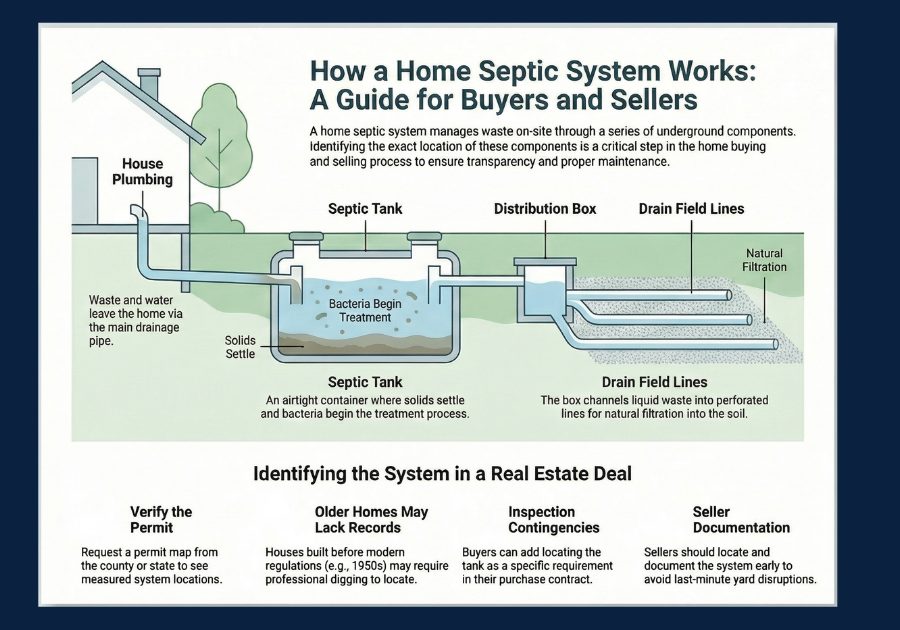
A simple illustration showing how wastewater flows from a home into a septic tank and through drain field lines for natural filtration.
How Septic Companies Can Locate a System
If the septic tank location is unknown, a septic company can typically locate it with a small amount of digging.
Professionals know how to identify likely locations based on the plumbing exit point from the house and the typical placement of drain fields. They can locate the tank caps and determine where the field lines run.
This process is fairly common and usually straightforward.
The key thing to remember is that a missing record is not necessarily a problem. It simply means a little investigation may be needed.
Advice for Sellers With Septic Systems
If you are preparing to sell a home with a septic system, I often recommend locating and documenting the tank location before the property goes on the market.
Buyers almost always ask about it.
If you hire a septic company ahead of time, you can document the location and provide that information to potential buyers. If the yard is disturbed during the process, you also have time to repair or reseed the grass before showings begin.
Taking this step can help prevent questions later in the transaction.

Preparing a home with a septic system for sale includes locating the tank, documenting the system, and sharing the information with potential buyers.
What Buyers Can Do If the Septic Tank Location Is Unknown
If you are a buyer and find the perfect home but the septic tank location is unknown, you still have several options.
One option is to include septic verification as part of your inspection contingency. During the inspection period, a septic company can locate the tank and evaluate the system.
Another option is to ask the seller to locate the septic tank before closing.
Some buyers also decide to move forward with the purchase and handle the process after they own the home. In that case, they can hire the septic company of their choice and have the system documented in their name.
Every situation is a little different, and the best path depends on the property and the buyer’s comfort level.

Many homes in rural East Tennessee rely on septic systems rather than municipal sewer connections.
How Septic Records Are Found in East Tennessee
Part of my job as a REALTOR® is helping track down this kind of information.
For larger counties such as Knox County and Hamilton County, septic permits are often available through county offices.
For more rural counties like Monroe County or Loudon County, the records may be maintained through the Tennessee Department of Environment and Conservation.
When clients ask these questions, I help request the records and determine whether a permit exists.
If one is on file, we can usually locate the septic tank easily. If not, we simply move to the next step of working with a septic professional.
Why Having a Knowledgeable REALTOR® Matters
Real estate contracts are legal documents, and buying or selling a home is often the largest financial decision people make.
As Melody Wagstaff, a REALTOR® serving East Tennessee, my goal is to help buyers and sellers navigate these details with confidence. Questions about septic systems, inspections, permits, and contingencies are all part of making sure the process goes smoothly.
If you ever find the perfect house but run into questions about something like a septic tank, that is exactly when having an experienced professional on your side can make the difference.