Facebook
 X
X
 Pinterest
 Copy Link

East Tennessee’s housing market continues to change as buyers see more choices while home sales remain active.
Is the East Tennessee housing market becoming easier for buyers, or are sellers still holding the advantage?
The July numbers make that question a little harder to answer.
We are seeing more homes come onto the market, more homes sell, and more homes go under contract compared with this time last year. At the same time, homes are taking a little longer to sell.
That combination tells me we are in a market where buyers may have more choices and a little more breathing room, but they are still actively purchasing homes.
For buyers and sellers in Knoxville and throughout East Tennessee, the bigger story isn’t any single statistic. It’s how these numbers work together.
What Happened in the East Tennessee Housing Market in July 2026?
The East Tennessee housing market remained active in July 2026, even as buyers gained more choices.
More homes entered the market compared with last July, yet closed sales increased at an even faster rate. Pending activity was also higher, while homes took slightly longer to sell.
For me, that points to a market that is becoming more balanced in some ways without suddenly becoming an easy market for either buyers or sellers.
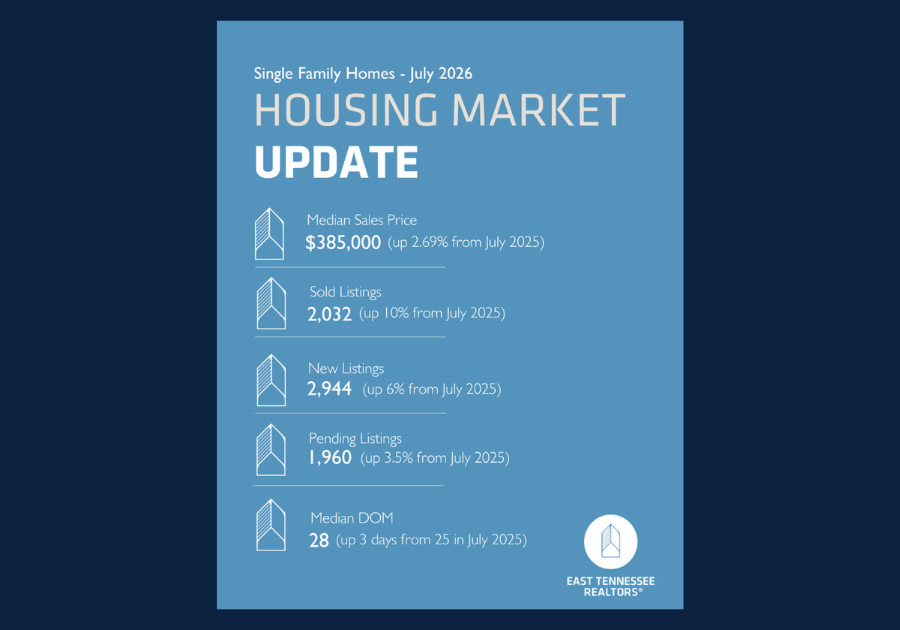
July 2026 single-family housing market statistics for the East Tennessee REALTORS® market area. Source: East Tennessee REALTORS®.
What the July Numbers Tell Us
What stands out to me this month isn’t one individual statistic. It’s what happens when we put several of them together.
More homes came onto the market than a year ago, but buyers absorbed that additional inventory. In fact, closed sales grew at a faster year-over-year pace than new listings, while pending activity also remained ahead of last year.
At the same time, homes took a little longer to sell.
That is an important combination.
Buyers appear to have more options than they did a year ago and, in some situations, may have a little more time to evaluate those options. That hasn’t stopped people from buying.
For sellers, increased competition means simply putting a home on the market isn’t the strategy. Buyers can compare one property with another, and they may be less willing to overlook price, condition, or needed repairs when they have alternatives.
This is one reason I think broad statements such as “It’s a buyer’s market” or “It’s still a seller’s market” can be misleading.
The answer can change depending on the house.
More Choices Can Change Buyer Behavior
One of the biggest changes I have watched in the East Tennessee real estate market is what happens when buyers have choices.
When inventory is extremely limited, a buyer may see one house that meets most of their needs and feel pressure to make a decision quickly.
Give that same buyer several possibilities, and the conversation changes.
Now they can compare.
Which home is in better condition? Which one has been maintained? Are there repairs that will need to be made shortly after closing? How does the price compare with recent sales? Is another property offering something this one isn’t?
More inventory doesn’t automatically mean buyers can make low offers and expect sellers to accept them. It does mean sellers have to think more carefully about how their property compares with the competition.
What I’m Seeing in the East Tennessee Market
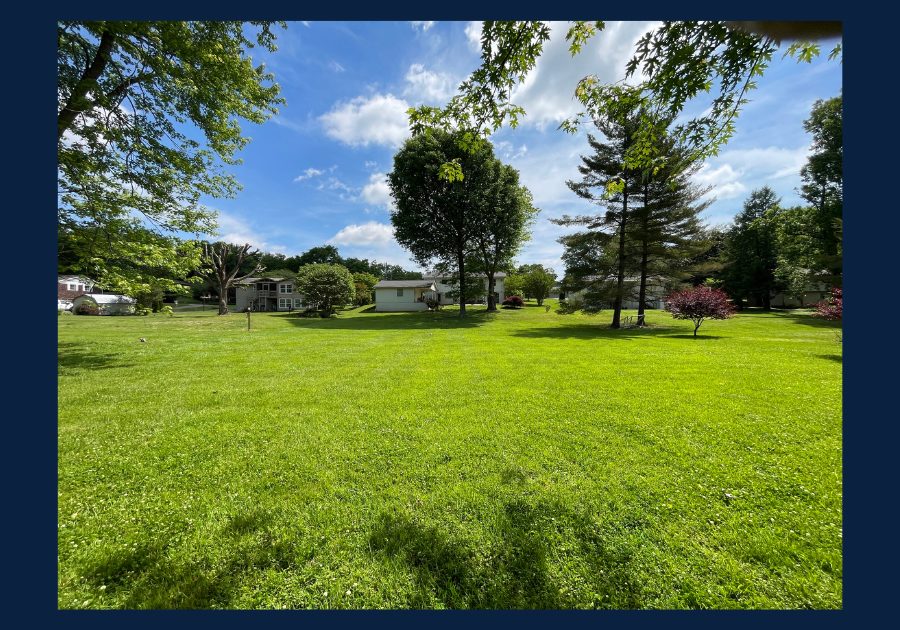
Regional housing statistics provide context, but price, condition, location, and competition can create a very different market for an individual home.
This is where regional statistics and what happens at the individual property level can look very different.
A monthly market report covers a large area and thousands of homes. Buyers and sellers don’t make decisions about thousands of homes. They make decisions about one.
I continue to see how much condition, location, price, and the competition surrounding a particular property matter.
A home that is positioned well for its market can attract attention. Another home in the same general area can have a very different experience if buyers believe the price doesn’t match its condition or the alternatives available to them.
That is why I don’t use a regional median sales price to tell a homeowner what their house is worth. I also wouldn’t tell a buyer that a home should be negotiable simply because the overall market is taking a little longer to sell.
The regional data gives us context.
The comparable properties give us strategy.
Real Estate Term of the Month: Absorption Rate
Since we’re talking about buyers absorbing additional inventory this month, absorption rate is a useful real estate term to know.
Absorption rate helps measure how quickly available homes are selling within a particular market during a given period.
Why does that matter?
Imagine two neighborhoods each have ten homes for sale. In one neighborhood, homes are selling quickly. In the other, very few are going under contract.
The number of homes available might be identical, but those two markets aren’t behaving the same way.
Looking at how quickly inventory is being absorbed can provide additional context about supply and demand. It is another reason I prefer looking at multiple pieces of market data rather than using one statistic to decide whether buyers or sellers have the advantage.
What Does This Mean if You’re Buying a Home in East Tennessee?
More choices can be helpful, but I wouldn’t confuse more choice with no competition.
If you are buying a home in Knoxville or another East Tennessee community, pay attention to the individual property.
How long has it been listed? Have there been price changes? What have comparable homes sold for? What condition is the home in? Are there other similar properties currently available?
Those questions can tell you much more about how to approach an offer than a regional statistic by itself.
A home that has been sitting on the market may present a different situation from a newly listed property that is attracting significant interest.
The goal isn’t necessarily to get the biggest discount.
The goal is to understand what you’re buying and make an informed decision about what that particular home is worth to you.
What Does This Mean if You’re Selling a Home in East Tennessee?
For sellers, July’s market reinforces something I think is becoming increasingly important: buyers have alternatives.
That makes your competition important.
Before determining a listing price, I would want to know more than what homes sold for six months ago. I would also want to know what buyers can choose from right now.
If several similar homes are available, buyers will compare them.
Price is part of that comparison, but so are condition, updates, location, photographs, presentation, and potential expenses after closing.
The market is still producing sales. The July numbers make that clear.
Getting from for sale to sold, however, may require more strategy than simply putting a sign in the yard and waiting.
The Bottom Line
The July 2026 East Tennessee housing market doesn’t fit neatly into a one-line description.
Buyers had more new listings to consider. Sellers still saw strong transaction activity. Homes took a little longer to sell, yet more properties closed than during the same period last year.
To me, that is a much more useful picture of the market than trying to decide whether buyers or sellers are “winning.”
If you’re thinking about buying or selling a home in Knoxville, Farragut, Maryville, Oak Ridge, Lenoir City, or another East Tennessee community, start with the regional market data.
Then narrow it down.
Your price range, location, property type, and competition are where the market statistics become useful for your actual real estate decision.