Facebook
 X
X
 Pinterest
 Copy Link
Some market shifts announce themselves loudly. Others show up quietly, noticed first by homeowners who are paying attention.
Right now, East Tennessee feels like the second kind.
Buyer activity is still present. Homes are still selling. New listings are still coming on the market. At the same time, homes are taking longer to sell, and pricing feels more sensitive than it did even a year ago.
This combination tends to create a different kind of market. One that rewards awareness more than urgency.
The difference between movement and momentum
Markets like this often confuse people because activity and momentum are not the same thing.
Movement simply means transactions are happening. Momentum has more to do with speed, confidence, and margin for error. When momentum slows, even slightly, sellers start to feel the difference first.
Homes do not stop selling. They just stop forgiving small missteps.
That is usually the point when strategy begins to matter again.
Where the data fits in
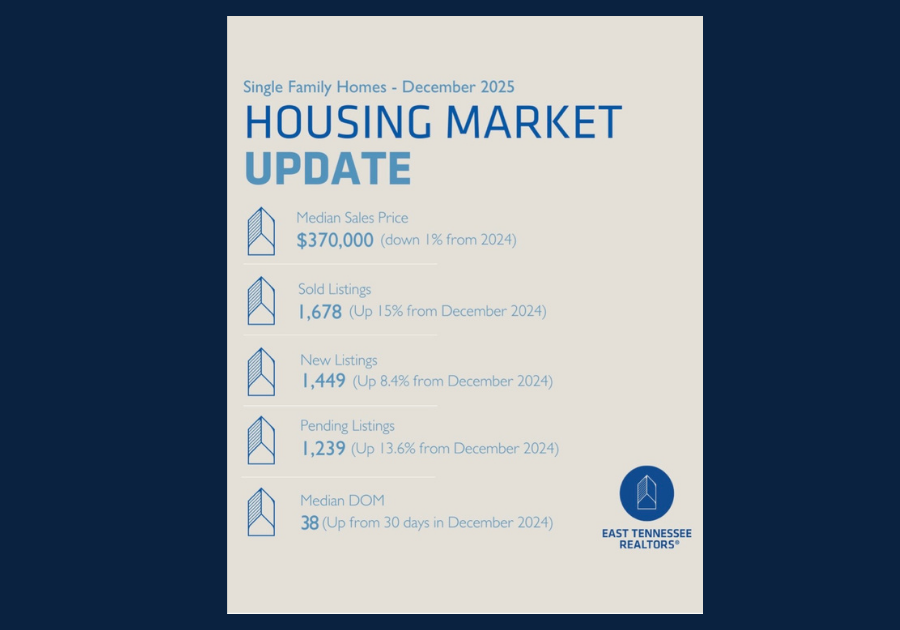
December housing market data offers insight into buyer activity and selling timelines across East Tennessee.
When you step back and look at December’s data, a few quiet patterns emerge.
Buyer activity increased compared to last year. More homes went under contract. More homes closed. At the same time, days on market increased, and pricing softened slightly year over year.
Those numbers matter less on their own than they do together.
Buyers are active, but they are taking more time. Sellers are listing, but homes are not rushing off the market. That combination changes the tone of a transaction.
What tends to matter when timelines stretch
In markets like this, sellers who experience smoother outcomes tend to focus less on reacting and more on positioning.
Pricing becomes less about testing the ceiling and more about understanding where buyers are comfortable engaging. Presentation starts carrying more weight because buyers have time to compare. Timing matters, not in a rushed sense, but in an intentional one.
Emotional readiness plays a role too. Markets that move more thoughtfully reward sellers who are prepared for feedback, adjustments, and a process that unfolds instead of sprints.
None of this signals a bad market. It signals a discerning one.
Paying attention earlier than necessary
Many homeowners wait for a clear signal before they start paying attention. By the time that signal feels obvious, the market has usually already shifted.
There is value in noticing patterns early, even if no immediate decision follows. Understanding how buyers are behaving now creates better options later, whether selling happens in a few months or further down the road.
In markets like this, awareness is rarely wasted.